Join the Baileigh Army!
Sign up for our newsletter and stay in the know! Get exclusive access to the latest product updates, special offers, classes and events delivered right to your inbox.

Sign up for our newsletter and stay in the know! Get exclusive access to the latest product updates, special offers, classes and events delivered right to your inbox.
Baileigh press brakes wield unmatched power for heavy-duty bending, precise control for intricate designs, and unwavering reliability for relentless production. A metal press brake forcefully bends sheet metal into precise shapes using a punch and die, allowing for complex angles and forms.
Different types of sheet metal press brakes include hydraulic press brakes, known for high tonnage, electric press brakes offering speed and precision, and mechanical press brakes favored for their robust simplicity. These machines are essential in manufacturing, metal fabrication, automotive, and aerospace industries, where accurate metal forming is critical.
Don't settle for anything less than the best in industrial metal forming. Explore our quality selection of press brakes and gear up to unleash the full potential of your metalworking shop.
Baileigh Industrial press brakes are built for shops that need accurate, repeatable bending across sheet metal, plate, bar stock, brackets, channels, enclosures, and custom fabricated parts. Whether you're producing one-off components or repeat production runs, the right press brake helps improve bend consistency, reduce rework, and expand your forming capabilities.
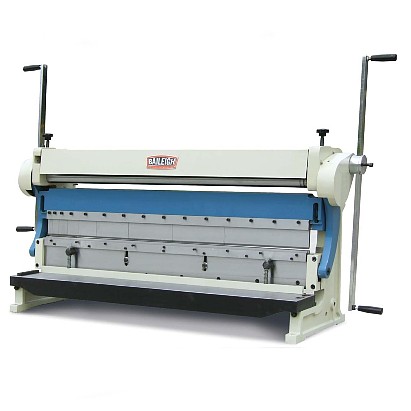
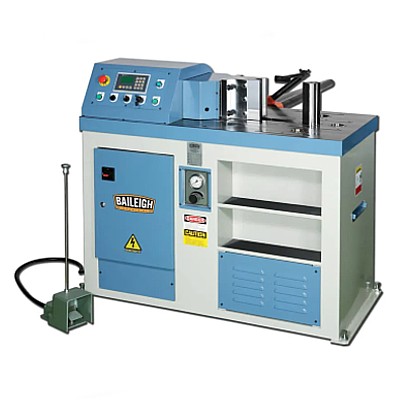
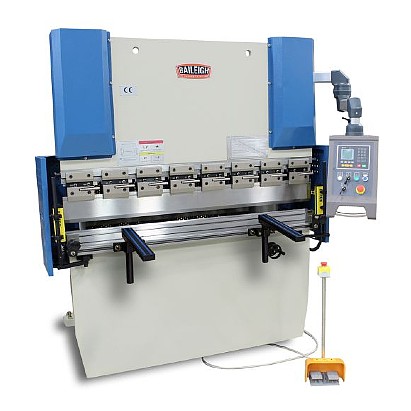
Baileigh's press brake lineup includes manual press brakes, horizontal press brakes, and vertical hydraulic press brakes designed for fabrication shops, maintenance departments, production facilities, and metalworking operations that need dependable bending performance.
Start with the material type, thickness, and length you bend most often. Mild steel, stainless steel, aluminum, and other alloys all require different forming force, tooling choices, and bend allowances. A machine should be selected based on your real material mix, not just occasional maximum capacity.
Press brake capacity is typically determined by bending length and tonnage. Longer parts require a wider machine, while thicker material requires more forming force. Choosing the right combination helps prevent underpowered bending, inconsistent angles, and unnecessary machine oversizing.
| Application | Common Consideration |
|---|---|
| Light brackets and tabs | Lower tonnage with flexible tooling |
| Sheet metal panels | Longer bending length and consistent angle control |
| Boxes, pans, and enclosures | Tooling clearance and repeatable setup |
| Plate bending | Higher tonnage and rigid frame construction |
| Repeat production | Backgauge control, repeatability, and faster setup |
Different press brake styles solve different bending problems. Manual press brakes are useful for lighter work and hands-on control. Horizontal press brakes are ideal for bending bar, rod, tube, and complex profiles along a horizontal plane. Vertical hydraulic press brakes are designed for sheet and plate bending where tonnage, length, and repeatability are critical.
If you frequently repeat the same parts, prioritize backgauge capability, digital controls, tooling repeatability, and consistent ram movement. These features reduce setup time, improve part consistency, and help operators produce accurate bends across multiple runs.
Tooling determines what shapes you can make. Consider punch and die options, box-and-pan clearance, radius requirements, flange height, material springback, and whether the machine supports the profiles your shop needs to produce.
Manual press brakes are a practical option for lower-volume bending, prototype work, light-gauge material, and small fabricated parts. They offer hands-on control, simple setup, and a compact footprint for shops that do not require hydraulic power or production automation.
Horizontal press brakes are designed for bending, punching, shearing, and forming material along a horizontal plane. They are especially useful for bar stock, rod, tube, flat material, and complex profiles that may be difficult to position on a traditional vertical press brake.
Vertical hydraulic press brakes provide the force, control, and bending length needed for sheet metal and plate forming. They are a strong fit for fabrication shops and production environments that need repeatable bends, consistent angles, and the ability to form longer parts.
NC and programmable press brakes improve repeatability by helping operators control backgauge position, bend depth, and setup sequences. These features are valuable for recurring jobs, multi-bend parts, and shops looking to reduce setup time and operator variation.
Press brakes can support specialty forming work with the right tooling, including brackets, channels, tabs, flanges, boxes, pans, gussets, and custom profiles. Matching tooling to the application is essential for accuracy and repeatable results.
Vertical hydraulic press brakes are often the best all-around choice for fabrication shops that bend sheet metal, plate, brackets, and structural components. They offer a strong combination of capacity, versatility, and repeatability.
Manual press brakes are well suited for lighter bending, occasional parts, and prototype work where simplicity, cost control, and hands-on adjustment are priorities.
Horizontal press brakes are valuable when parts are easier to bend from the side or when working with bar, tube, rod, and irregular profiles. They are also useful for shops that need forming flexibility beyond traditional sheet bending.
Hydraulic, NC, and programmable press brakes help improve consistency on repeat parts by reducing setup variation and operator guesswork. Backgauge control and repeatable tooling setups are especially important for production bending.
When forming boxes, pans, panels, and enclosures, consider bend length, flange clearance, tooling style, and part geometry. The right setup can reduce rework and improve finished-part consistency.
| Feature | Manual Press Brake | Horizontal Press Brake | Vertical Hydraulic Press Brake | NC / Programmable Press Brake |
|---|---|---|---|---|
| Light-Gauge Bending | ✔ | Limited | ✔ | ✔ |
| Sheet Metal & Plate Bending | Limited | Limited | ✔ | ✔ |
| Bar, Rod & Tube Forming | Limited | ✔ | Limited | Limited |
| Repeat Production | Limited | Good | Good | Excellent |
| Operator Control | ✔ | ✔ | Good | Excellent |
| Setup Speed | Good | Good | Good | Excellent |
| High Tonnage Capacity | Limited | Good | ✔ | ✔ |
| Best All-Around Fabrication Choice | Good for light work | Best for profiles | ✔ | Best for repeat work |
The right size depends on material thickness, bend length, material type, and desired bend radius. Shops should choose a machine with enough tonnage and width for their common jobs while allowing capacity for future work.
A press applies force for assembly, straightening, forming, and general pressing operations. A press brake is specifically designed to bend sheet metal, plate, and formed profiles using punches, dies, and controlled ram movement.
A vertical press brake bends material using a vertical ram and is commonly used for sheet metal and plate. A horizontal press brake applies force horizontally and is useful for bar, rod, tube, profile bending, and specialized forming tasks.
NC and programmable controls are useful when you repeat the same parts, need faster setups, or want more consistent bend results between operators. For occasional bending, a simpler manual or hydraulic model may be sufficient.
Yes, press brakes can bend stainless steel, aluminum, mild steel, and other materials when the machine capacity, tooling, bend radius, and setup are appropriate for the material.
Browse the full press brake lineup below to find the right bending length, tonnage, control type, and forming capability for your fabrication or production requirements.